
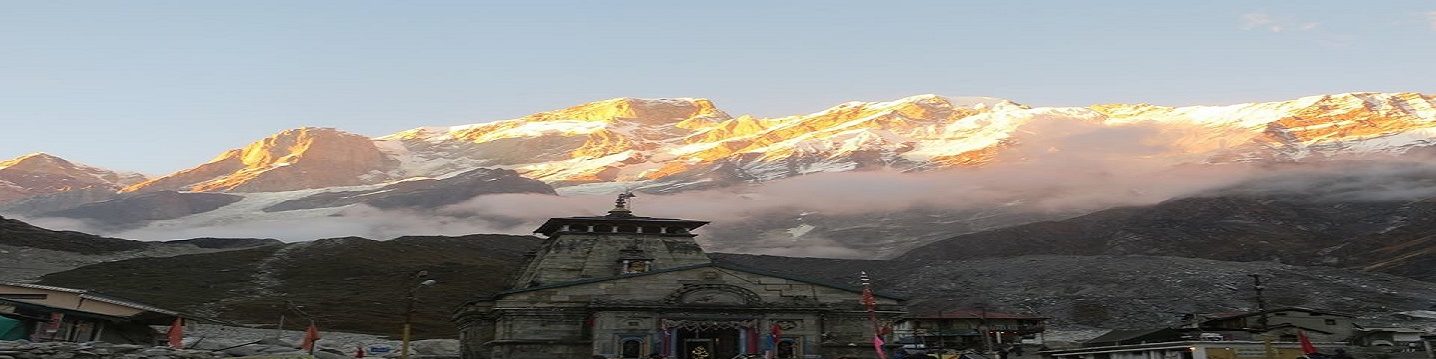
Chardham Yatra Route Map Explained: Distance, Stops & Travel Tips
The Chardham Yatra route map is the backbone of a successful pilgrimage to the four sacred Himalayan shrines—Yamunotri, Gangotri, Kedarnath, and Badrinath. Understanding distances, halts, terrain conditions, and optimal travel sequences ensures a safe, time-efficient, and spiritually enriching journey. We present a precise, route-focused guide designed for pilgrims planning independently or through a char dham yatra package, with practical distances, stopovers, and travel insights. 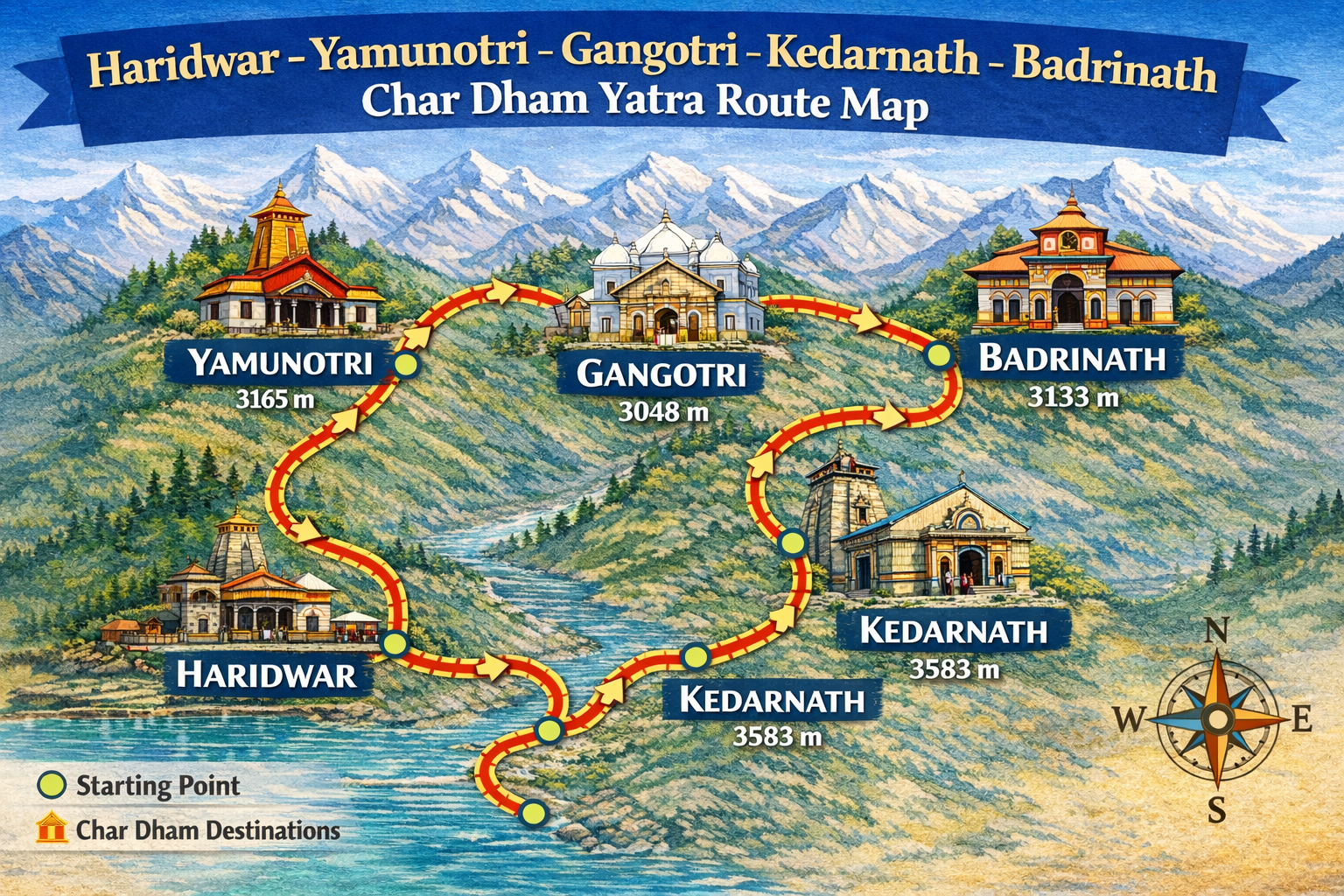
Overview of the Traditional Chardham Yatra Route
The classic Chardham Yatra follows a clockwise route beginning from the plains of Haridwar, Rishikesh, or Dehradun and moving into the Garhwal Himalayas. This sequence supports gradual altitude gain and smoother acclimatization.
Standard Route Order:
-
Yamunotri
-
Gangotri
-
Kedarnath
-
Badrinath
This order remains the most reliable for road travelers and is the default structure for reputable char dham yatra packages.
Starting Points and Entry Gateways
Pilgrims typically begin from one of three gateways:
-
Haridwar – Spiritual gateway with excellent rail connectivity
-
Rishikesh – Closest spiritual town to the Himalayas
-
Dehradun – Preferred for helicopter routes and premium packages
Road itineraries usually commence from Haridwar or Rishikesh, while helicopter itineraries are centered around Dehradun.
Route to Yamunotri: Distance, Stops & Trek Details
Haridwar/Rishikesh → Barkot → Janki Chatti → Yamunotri
-
Haridwar to Barkot: ~210 km | 8–9 hours
-
Barkot to Janki Chatti: ~45 km | 2 hours
-
Janki Chatti to Yamunotri: 6 km trek (one way)
Key Stopovers:
-
Barkot (ideal night halt)
-
Janki Chatti (trek base)
The Yamunotri trek is well-marked and suitable for beginners. Ponies and palkis are available. Most char dham yatra packages include guided support for this segment.
Route to Gangotri: Distance, Scenic Halts & Road Conditions
Yamunotri → Barkot → Uttarkashi → Gangotri
-
Barkot to Uttarkashi: ~100 km | 4–5 hours
-
Uttarkashi to Gangotri: ~100 km | 4–5 hours
Important Stops:
-
Uttarkashi (night halt, medical facilities)
-
Gangnani (hot water springs)
Roads to Gangotri are motorable up to the temple. The route follows the Bhagirathi River, offering breathtaking views. Group travelers benefit from fixed departures within a char dham yatra package, ensuring timely darshan.
Route to Kedarnath: Distance, Base Camps & Trek Route
Gangotri → Uttarkashi → Guptkashi → Sonprayag → Gaurikund → Kedarnath
-
Uttarkashi to Guptkashi: ~220 km | 8–9 hours
-
Guptkashi to Sonprayag: ~30 km
-
Sonprayag to Gaurikund: ~5 km (local transport)
-
Gaurikund to Kedarnath: 16 km trek (one way)
Primary Halts:
-
Guptkashi / Phata / Sitapur
-
Sonprayag (mandatory transit)
The Kedarnath trek is demanding. Helicopter services operate from Phata, Sersi, and Guptkashi. Well-structured char dham yatra packages manage trek schedules, accommodations, and weather buffers.
Route to Badrinath: Distance, Mountain Passes & Stops
Kedarnath → Guptkashi → Joshimath → Badrinath
-
Guptkashi to Joshimath: ~150 km | 6–7 hours
-
Joshimath to Badrinath: ~45 km | 2 hours
Major Attractions on Route:
-
Vishnuprayag
-
Nandaprayag
-
Mana Village (last Indian village)
The road to Badrinath is wide and comparatively smoother. Night halts at Joshimath are common and recommended by most char dham yatra packages.
Complete Distance Chart (Approximate)
-
Haridwar → Yamunotri: 255 km + 6 km trek
-
Yamunotri → Gangotri: 240 km
-
Gangotri → Kedarnath: 220 km + 16 km trek
-
Kedarnath → Badrinath: 190 km
-
Badrinath → Haridwar: 310 km
Total road distance: ~1,200–1,300 km (excluding treks)
Best Travel Tips for Navigating the Chardham Route
Plan Early and Move Gradually
-
Avoid backtracking routes
-
Schedule buffer days for weather disruptions
Choose Reliable Transport
-
Hill-experienced drivers
-
Well-maintained vehicles with ground clearance
Time Your Drives
-
Start early mornings
-
Avoid night driving in mountains
Travelers choosing a char dham yatra package benefit from route-optimized itineraries and on-ground coordination.
Road vs Helicopter Route Planning
Road Route Advantages
-
Traditional pilgrimage experience
-
Budget-friendly
-
Scenic Himalayan drives
Helicopter Route Advantages
-
Covers all dhams in 4–6 days
-
Minimal physical exertion
-
Ideal for senior citizens
Hybrid itineraries are also available in premium char dham yatra packages, combining road travel with helicopter segments.
Seasonal Route Conditions and Safety Notes
-
May–June: Clear routes, peak rush
-
July–August: Landslides, route closures possible
-
September–October: Stable weather, fewer crowds
Always track daily advisories and keep registration documents accessible at checkpoints along the route.
Accommodation Planning Along the Route
Strategic night halts enhance comfort and safety.
Recommended Halt Towns:
-
Barkot
-
Uttarkashi
-
Guptkashi
-
Joshimath
Pre-booked stays are integral to a dependable char dham yatra package, especially during peak season.
Final Route Strategy for a Seamless Chardham Yatra
A well-understood Chardham Yatra route map eliminates uncertainty, reduces fatigue, and preserves spiritual focus. Pilgrims who align distances, halts, and trek segments with realistic daily plans experience a smoother journey. Selecting a professionally curated char dham yatra package further streamlines logistics, allowing uninterrupted devotion amid the Himalayas.